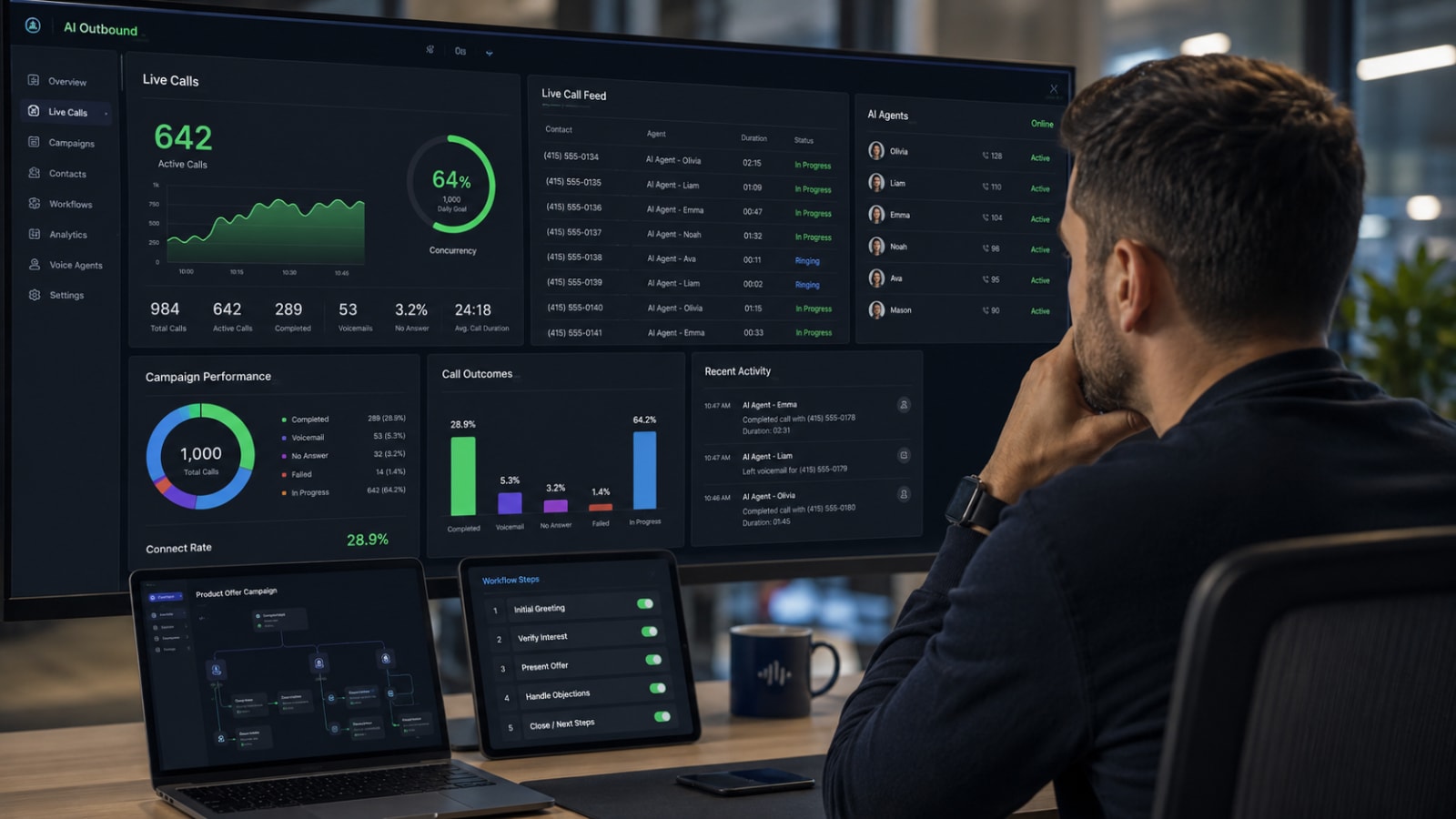
A thousand calls a day used to mean a room of fifteen telecallers, a supervisor, and a spreadsheet nobody trusted. With an AI calling platform it means one CSV upload and four settings. Here is how the mechanics actually work — and where teams trip up.
The four settings that matter
- Concurrency — how many calls run in parallel. At 5 concurrent calls and ~3 minutes per answered call, you clear roughly 100 calls an hour; 1,000 calls fits in a working day.
- Calling window — respect business hours (say 10am–7pm IST). Calls queued outside the window wait automatically.
- Retry rules — no-answers and busy lines get retried later, not hammered immediately. Two or three well-spaced retries lift connection rates by 20–30%.
- Pacing for announcements — one-way blasts can run wider (higher concurrency at ₹1.5/min) than two-way conversations.
What “good” looks like at volume
Expect 55–70% pickup on clean, recent Indian mobile numbers called from a local +91 caller-ID during business hours. Every answered call should end with a transcript, summary and rating landing in your dashboard — that is the whole point of automating: the data, not just the dial.
Compliance is not optional in India
- Call within TRAI-sane hours; avoid early morning and late night.
- Maintain a do-not-call suppression list and honour opt-outs immediately.
- Be upfront that it’s an automated call when asked.
- Commercial calling runs on registered numbers with proper KYC/DLT — a real platform handles this with you, not around you.
Cost of a 1,000-call day
Say 60% pick up and average 2.5 minutes: 600 × 2.5 = 1,500 minutes. At ₹4.5/min (Growth plan) that is ₹6,750 for the day — with structured results for every call. Compare that to fifteen telecaller salaries and the math ends quickly. Plans are on the pricing page; campaign setup is covered step-by-step in the documentation.